
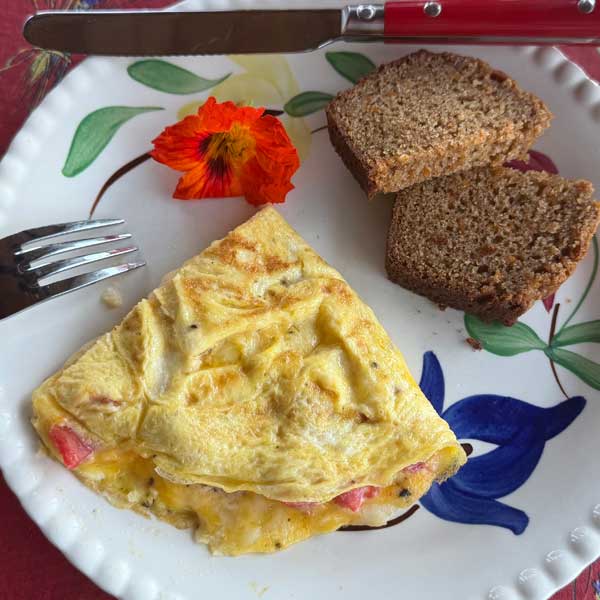
Thanks to our early ancestors and dedicated apple saviors, we can enjoy the subtle flavors, textures and aromas of dozens of America’s favorite fruit: apples. The apple was an important component of early New England colonists’ life, and no homestead was complete without an apple orchard. For the industrious household, apples provided fruit for the table, vinegar for food preservation, feed for livestock, apple molasses for a sweetener, and cider.
When we first moved to Stonington, the discovery of twenty-one old and abandoned apple trees at Barbour Farm, some dating back to the mid 1800’s, encouraged us to maintain the orchard and harvest the fruit. We store tubs of apples in the root cellar for winter consumption, make applesauce (view recipe), feed our rabbits, and press apples into cider, canning 24 gallons of apple juice, enough to last until the next harvest.
Since that time, the trees that we harvest on the island and our knowledge of the diversity and creative uses of the apple have expanded. There are hundreds of varieties of apples, and four major categories. Firm-tart apples like Granny Smith, Rhode Island Greening and Northern Spy are best for baking, and make superb pies. Firm-sweet apples like Golden Delicious, Honeycrisp and Winter Banana make excellent salads and lighter desserts. Tender-tart and tender-sweet apples, Cortland, Macoun, MacIntosh, St. Lawrence are delicious when eaten out of hand or put into sauce.
Applesauce is a convenient method to preserve apples, a popular standalone dish, particularly among younger folks, and a versatile ingredient in many recipes. Applesauce is rich in fiber, Vitamin C and minerals. A jar of applesauce in the pantry is a fruity treat, providing a sweet alternative without excessive sugar. We enjoy applesauce on pancakes, slathered over grilled and roasted meats, cooked down into apple butter and spread on toast, and as an ingredient for baked goods.
The recipe for Applesauce – Carrot Bread is from my archives and a snap to prepare. For best results, be sure to have your butter and eggs at room temperature. A cold batter heats unevenly: the crust gets too dark before the loaf cooks in the center. This is a quick bread, leavened by the chemical reaction of baking soda with the acidity of the applesauce. Whisking the dry ingredients together completely prevents bitter lumps in the bread.
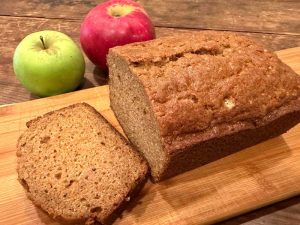
Perfect for a morning snack, delicious with whipped cream or ice cream for dessert, spread with cream cheese for a tea sandwich or packed into the lunchbox, Applesauce – Carrot Bread has a delicate crumb and subtle, spicy flavor. The applesauce adds a depth of flavor and moistness and the bread stores well in a tin for several days.
Apples are more than something to eat and fall is the time to enjoy the bounty of Maine’s harvest. Apple picking, apple tasting and cooking with apples are wonderful family adventures. Expand your culinary horizons, enjoy eating a fruit that is over 3000 years old, and discover the apple of your eye.
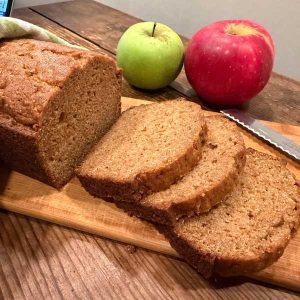
Applesauce – Carrot Bread
Ingredients
- 1 cup all-purpose flour
- 1 cup whole-wheat flour
- ½ teaspoon baking soda
- ½ teaspoon ground ginger
- ½ teaspoon ground cloves
- ½ cup butter at room temperature
- ½ cup sugar
- ½ cup brown sugar
- 1 teaspoon vanilla extract
- 2 eggs
- ½ cup unsweetened applesauce
- 1 cup grated carrots
Instructions
- Assemble ingredients and tools. Preheat the oven to 350 degrees. Grease a 9 x 5-inch loaf pan.
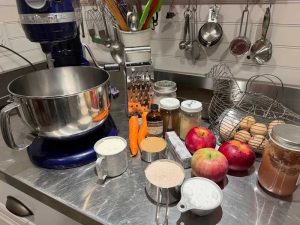
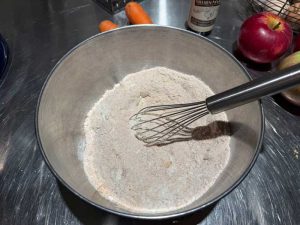
- In a medium bowl, whisk together the flours, baking soda and spices.
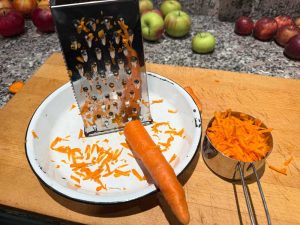
- Grate the carrot and set aside.
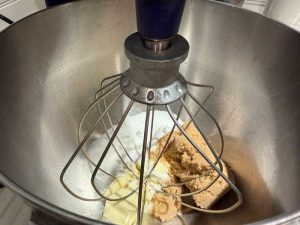
- In the bowl of your electric mixer, cream together the butter and sugars. Beat in the eggs and vanilla, scraping down the sides as needed.
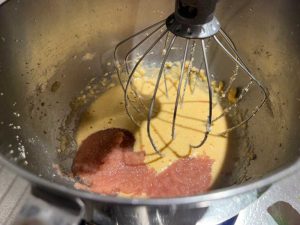
- Beat in the applesauce.
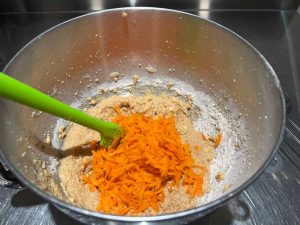
- Add the dry ingredients and mix on low until just combined. Fold in the grated carrots.
- Spread the batter evenly in the prepared pan.
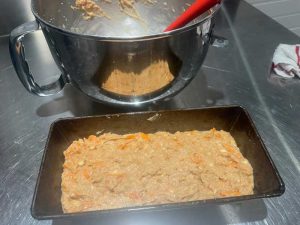
- Bake until a toothpick comes out clean. About 55-65 minutes. Let the bread cool in the pan on a rack for 10 minutes, then remove from the pan to the rack. Allow the bread to cool completely before slicing.
Cheryl's Notes